What most businesses really want to know
If you are running laundry in-house, you are probably asking one simple question.
How often should commercial laundry equipment be serviced so it keeps running without causing problems?
You might be renting for the first time.
You might own your machines already.
Or you might just want to stop dealing with unexpected breakdowns.
The answer depends on how heavily your equipment is used. However, one rule applies to everyone. Servicing should be planned, not reactive.
How often should commercial laundry equipment be serviced?
There is no one-size-fits-all schedule. Usage makes the difference.
As a practical guide:
- High-use environments often need servicing twice per year
- Moderate-use sites are usually serviced annually
- Gas dryers require mandatory annual Gas Safe inspections
If your machines run most of the day, they need closer attention. If they are used less frequently, an annual check may be enough.
The early signs you may be overdue
Machines rarely stop without warning. Small changes usually appear first.
You might notice:
- Cycles taking longer than before
- Towels not drying fully
- Increased noise
- Minor faults becoming more frequent
These are often signs that maintenance is required.
Left alone, those small issues tend to turn into bigger repairs. Planned servicing prevents that pattern.
Safety and compliance are part of the answer
Servicing is not only about performance. It is also about safety.
If you use gas-powered dryers, annual Gas Safe inspections are a legal requirement. These checks confirm appliances remain safe and compliant.
Dryer ducting and lint management also need regular attention. Lint build-up restricts airflow and increases fire risk. It can also extend drying times and strain the machine.
Whether you rent or own, these responsibilities do not disappear. They simply need to be managed properly.
If you own your machines
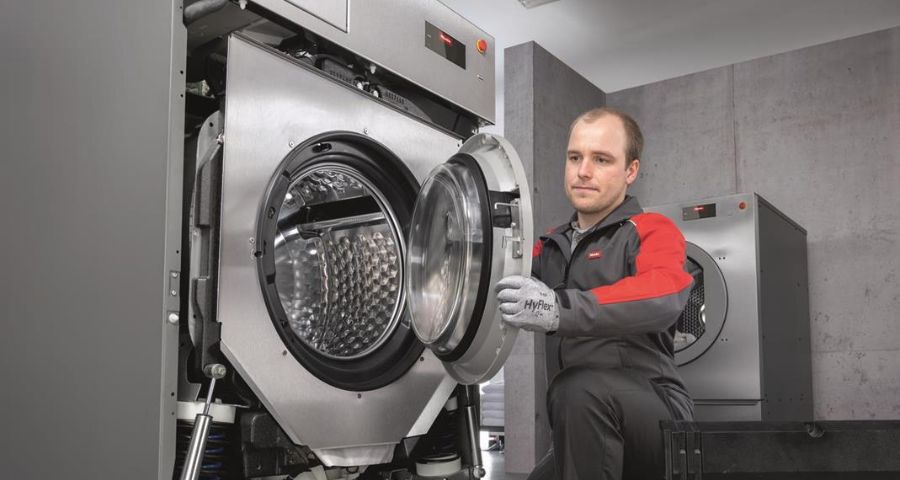
When equipment is owned outright, servicing is your responsibility.
That means arranging engineers, tracking inspection dates and managing compliance paperwork. It also means covering the cost of unexpected repairs if maintenance has been delayed.
Many breakdowns could have been prevented with regular checks. However, servicing is often postponed when machines appear to be working normally.
The challenge is that problems build slowly.
If you rent your equipment
With rental, servicing should be built into the agreement.
Maintenance is scheduled properly. Engineers attend as required. Gas Safe inspections and safety checks are planned in advance.
Instead of asking how often should commercial laundry equipment be serviced, the question becomes whether it is already covered and managed.
This removes uncertainty. It also reduces the risk of sudden repair bills and downtime.
The real goal of servicing
Regular servicing keeps wash and dry times steady. It protects key components. It helps control energy use. Most importantly, it reduces disruption.
If your machines are central to daily operations, reliability matters.
Servicing is not about over-maintaining equipment. It is about preventing avoidable problems.
Take the next step
If you are unsure whether your current servicing schedule is adequate, the first step is a straightforward review of how your machines are being used.
Whether you own or rent, the aim is the same. Keep equipment reliable, compliant and fit for purpose.
As Approved Manufacturer Sales and Service Partners, our team works with trusted commercial laundry brands and provides ongoing servicing and technical support throughout the rental agreement.
If you are considering rental and want servicing, compliance and engineer support built in from the start, request a quote and arrange a survey.