Understand the difference before you decide
When comparing heat pump vs vented vs gas dryers, many businesses focus on speed. However, speed is only part of the picture.
The right dryer depends on your building, your workload and the services available on site.
Each type works differently. Each needs different installation conditions. Choosing the right one from the start avoids problems later and ensures your laundry room runs smoothly day after day.
Vented dryers – Simple and familiar
Vented dryers are widely used in commercial laundry rooms. They push warm, damp air out of the building through a duct.
In practical terms, that means:
- Straightforward design
- Fast drying cycles
- Lower upfront equipment cost
- A need for proper external venting
Because hot air is expelled directly outside, drying times are usually quick. That makes vented dryers a reliable choice in many settings.
However, they rely on suitable ducting. If ventilation routes are limited, installation can become more complex.
Where good airflow is already in place, vented dryers remain a sensible and dependable option in a rental setup.
Gas dryers – Built for heavier workloads
Gas dryers generate heat from a gas supply. As a result, they often dry loads faster than other types.
For businesses running multiple cycles each day, this can make a real difference.
Gas dryers typically provide:
- Fast and consistent drying
- Lower energy cost per cycle in high-use environments
- A requirement for a suitable gas connection
- Mandatory annual Gas Safe inspections
They are often well suited to hotels, care homes and leisure centres where demand is steady and turnaround times matter.
However, gas dryers require the correct infrastructure. A proper gas supply must be available and annual safety checks are a legal requirement. In a rental arrangement, these checks should be planned from the beginning and managed throughout the agreement.
Heat pump dryers – Flexible and energy conscious
Heat pump dryers work differently. Instead of venting hot air outside, they recycle heat inside the machine.
This usually means lower energy use. However, it also means longer drying cycles compared to gas or vented models.
In simple terms, heat pump dryers offer:
- Reduced energy consumption
- No need for external ducting
- Lower heat output into the room
- Longer drying times
Because no venting is required, they are often easier to install. This makes them a good option in buildings where adding ductwork is difficult or not possible.
They often suit smaller sites, retail units and locations with limited infrastructure. However, in very high-volume environments where speed is critical, longer drying cycles may become a constraint.
Which dryer works best in a rental setup?
There is no single answer. The right choice depends on how much laundry you process and what your building can support.
Before deciding, ask:
- How many loads run each day?
- Is speed more important than energy savings?
- Is gas available on site?
- Can proper ventilation be installed?
- Is demand likely to increase?
The first step should always be a site survey. That ensures the dryer matches both your workload and your building services.
Getting this right avoids installing equipment that struggles to keep up.
Rental also makes future planning easier. If demand increases, capacity can be upgraded to handle higher volumes without a large upfront purchase.
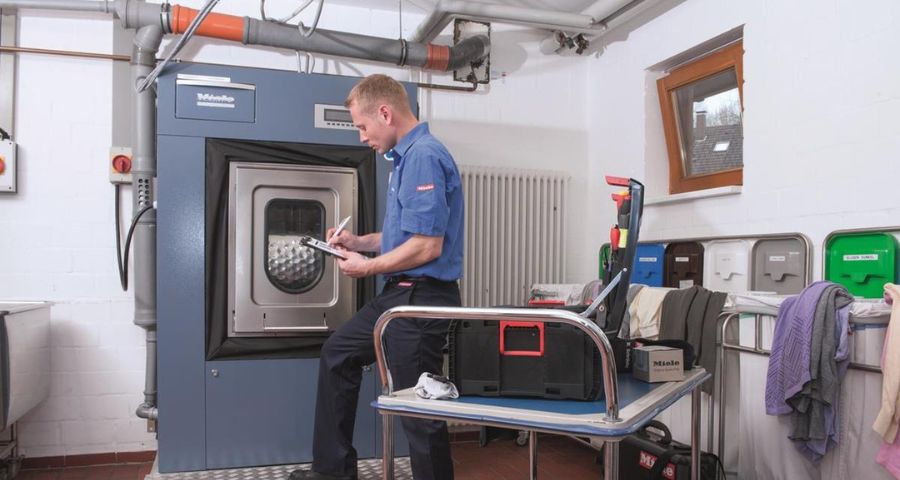
Servicing and safety matter just as much
The type of dryer you choose is only part of the decision. Ongoing maintenance is just as important.
Regular servicing helps:
- Keep drying times steady
- Maintain energy efficiency
- Reduce strain on components
- Prevent unexpected breakdowns
Without routine maintenance, machines often slow down gradually. Cycles take longer. Energy use rises. Downtime becomes more frequent.
Where gas dryers are installed, annual Gas Safe inspections are mandatory. Ductwork and lint management must also be monitored carefully to reduce fire risk and maintain airflow.
In a rental agreement, servicing and compliance should be built in from the start. That removes uncertainty and ensures your equipment stays reliable.
Think beyond drying speed
When comparing heat pump vs vented vs gas dryers, it is easy to focus on how fast they dry a load.
However, it also helps to consider:
- Day-to-day reliability
- Installation practicality
- Ongoing energy use
- Safety responsibilities
- Future capacity needs
A well-planned setup should cope with current demand and allow for increased workload over time.
Make the decision with confidence
Choosing between heat pump, vented and gas dryers is not about selecting the most powerful machine. It is about choosing the one that fits your building and your workload.
Once the installation conditions are clear, the right option usually becomes obvious.
With the correct specification, proper servicing and compliance support in place, your dryer should simply do its job without disruption.
Take the next step
If you are comparing heat pump vs vented vs gas dryers and want clear advice based on your building and workload, the next step is a professional site assessment.
This ensures the equipment is correctly specified, safely installed and fully supported throughout the rental term.
As Approved Manufacturer Sales and Service Partners, our team works with trusted commercial laundry brands and provides ongoing servicing and technical support throughout the rental agreement.