Commercial laundry room requirements begin with workload
A successful laundry room starts with more than choosing a washing machine, dryer or ironing set up. Before any equipment is installed, the room, building services and expected workload all need to be assessed.
Commercial laundry room requirements vary between businesses. A small hair salon will not need the same setup as a hotel, care home or leisure facility processing laundry throughout the day.
Planning these details early helps prevent delays, unsuitable equipment and expensive installation changes. It also ensures the finished laundry room can handle daily demand safely and reliably.
A commercial laundry room requirements checklist
Every site is different. However, there are several practical areas that should always be reviewed before selecting equipment.
Confirm the expected laundry workload
Start by calculating how much laundry the business needs to process.
Consider the number of loads completed each day, the items being washed and how quickly they need to be ready for use again. Peak periods also matter. A hotel may process more bedding during busy weekends, while a gym may face increased towel demand at particular times of day.
This information helps determine the capacity and number of machines required. It also reduces the risk of choosing equipment that needs to run constantly just to keep up.
Our guide to choosing the right size of commercial washer explains how drum capacity should be matched to real daily usage.
Check the available space and access
A machine may fit inside the room, but it still needs to reach that room safely.
Measure doorways, corridors, stairwells and any tight turns along the delivery route. You should also consider whether engineers will have enough space to install, inspect and service the equipment.
Inside the laundry room, allow suitable clearance around each machine. Doors must open fully and staff should be able to load and unload laundry without blocking walkways.
The floor must also be appropriate for the weight and movement of commercial equipment. Any concerns about the floor or building structure should be checked before installation.
Review water supply and drainage
Commercial washing machines rely on a suitable water supply and effective drainage.
Water pressure, inlet connections and drain positions can all affect where the machines can be installed. The drainage system must also cope with the volume of water discharged during busy periods.
Poor drainage can cause slow emptying, operational problems or water backing up into the room. Therefore, these checks should take place before the final machine is selected.
When reviewing commercial washing machine rental, the installation requirements should be considered alongside capacity and cycle times.
Confirm electrical and gas requirements
Different machines need different electrical supplies. Smaller equipment may use a standard supply, while larger commercial machines can require higher-capacity connections.
An electrician may need to confirm whether the existing supply can safely support the planned setup. The Health and Safety Executive states that workplace electrical equipment must be maintained to prevent danger, with checks based on the equipment and its working environment.
Gas dryers also require the correct gas connection. Any work on a gas appliance or installation must be completed by an appropriately qualified Gas Safe registered engineer.
Checking the available services early avoids choosing equipment that the building cannot support without significant additional work.
Plan ventilation and dryer ducting
Dryers produce heat and moisture, so ventilation forms an important part of many commercial laundry room requirements.
Vented and gas dryers generally need suitable ducting to move air outside. The route, length and position of that ducting can affect both installation and dryer performance.
Where external ventilation is difficult, a heat pump dryer may offer another option. Heat pump models recycle heat within the machine and do not usually require the same external ducting. However, they can have longer drying cycles, so they may not suit every workload.
Our comparison of heat pump, vented and gas dryers explains the differences in more detail.
Plan how laundry will move through the room
The room should support a clear and practical workflow.
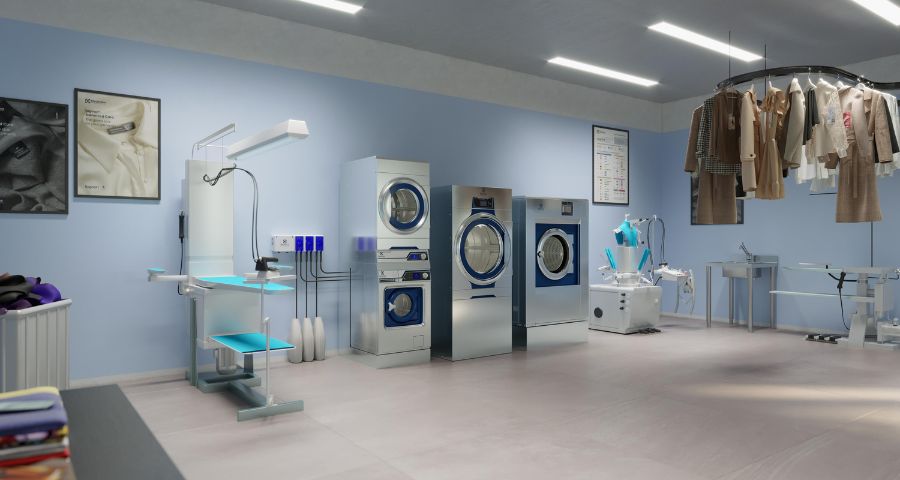
Think about how laundry enters the space, where it is sorted and how it moves between washing, drying and ironing. Staff should not need to repeatedly cross the room or move heavy loads around obstacles.
A simple workflow might include:
- An area for incoming or soiled laundry
- Clear access to washing machines
- Space beside dryers for unloading
- A clean area for folding or ironing
- Storage for finished laundry and supplies
Businesses with stricter hygiene requirements may also need clearer separation between dirty and clean items. This can be particularly important in care, healthcare or veterinary environments.
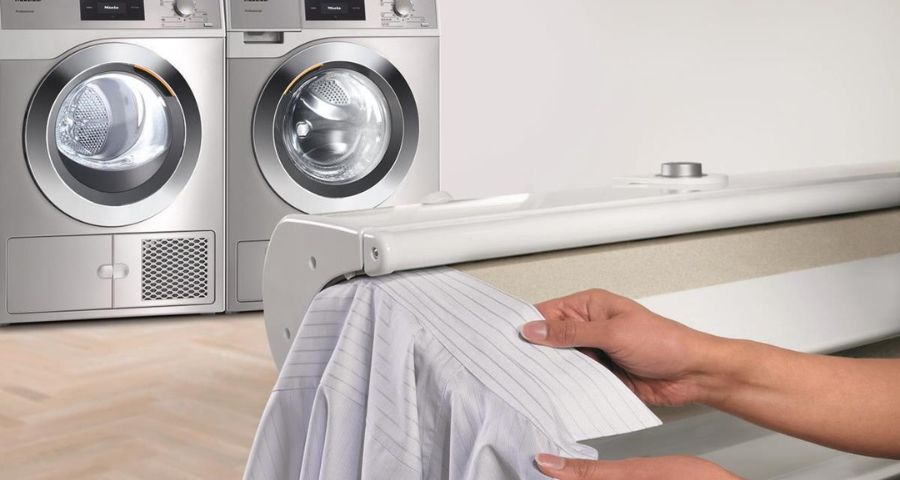
Where commercial ironing equipment forms part of the setup, allow enough room for feeding, receiving and safely handling larger items.
Think beyond the initial installation
A laundry room still needs to work after the equipment has been installed.
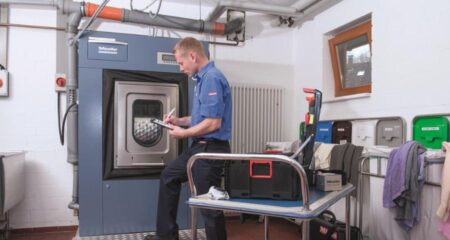
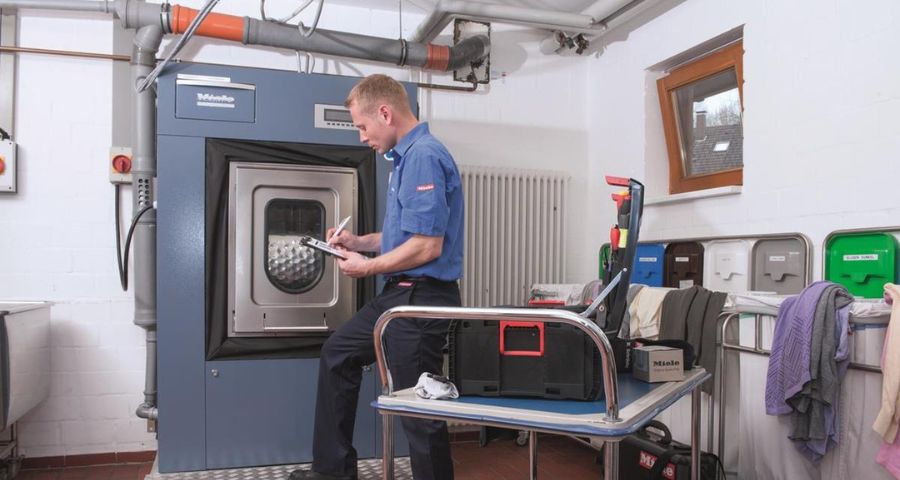
Engineers require safe access for routine servicing and repairs. Filters, detergent compartments, drains and dryer ducting must also remain accessible to staff.
Do not place equipment so tightly that basic maintenance becomes difficult. Limited access can turn a straightforward service visit into a more disruptive job.
Planned servicing helps maintain wash and dry performance while identifying wear before it causes a breakdown. The HSE also advises that work equipment should be maintained so it continues to operate safely and effectively.
With a supported rental agreement, routine servicing and engineer support can be planned from the beginning. This gives the business a clearer understanding of how the equipment will be maintained throughout the rental term.
Check commercial laundry room requirements with a site assessment
It is difficult to confirm every requirement from measurements or photographs alone.
A professional site assessment brings the full picture together. It reviews workload, available space, delivery access, utilities, ventilation and future capacity needs.
This helps ensure the recommended machines suit both the business and the building. It can also highlight any work that needs to be completed before installation day.
Laundry Rental Scotland supplies commercial washing machines, tumble dryers and ironing equipment from trusted manufacturer partners. Our team also provides installation, planned maintenance and ongoing engineer support throughout the rental agreement.