Commercial vs domestic washing machines serve different purposes
At first glance, commercial and domestic washing machines can look quite similar. Both wash laundry, offer a choice of programmes and come in different drum sizes.
However, they are designed for very different levels of use.
A domestic washing machine is made for the typical demands of a household. A commercial machine is designed to complete repeated cycles in the demands of a working environment where delays can affect the wider business.
For hotels, care homes, salons, gyms and other organisations processing laundry regularly, this difference matters. Choosing a domestic machine because it costs less initially can create problems once it faces a workload or a frequency of use it was not designed to handle.
Commercial machines are built for repeated daily use
One of the main differences between commercial vs domestic washing machines is how often they are expected to run.
A household may complete several loads each week. In comparison, a business might need to process several loads every day. Some operations run their laundry equipment from morning until evening.
Commercial machines are built with this level of use in mind. Their components, controls and internal systems are designed to withstand regular cycles and demanding workloads.
This does not mean every business needs the largest machine available. Instead, it means the equipment should be designed for commercial use and correctly matched to the amount of laundry being processed.
Our commercial washing machine capacity guide explains how daily volumes, peak demand and turnaround times affect the size of machine required.
Faster turnaround keeps the business moving
Cycle time may not matter greatly in a household setting. However, it can make a significant difference in a business.
A hotel needs bedding ready for incoming guests. A salon needs clean towels throughout the working day. Meanwhile, a care home may need a steady supply of clothing and bedding.
Domestic programmes can take longer because they are designed around household routines. Commercial equipment provides programmes and cycle times suited to professional workloads.
Faster turnaround allows staff to process more laundry within the available working day. It can also reduce the need to leave machines running late into the evening simply to clear a backlog.
However, washing capacity should always be considered alongside drying capacity. Installing a faster or larger washer will not solve the problem if the dryer cannot keep up.
Commercial equipment supports more demanding laundry needs
Businesses do not all wash the same type of laundry.
A gym may process large volumes of towels. Hotels regularly handle sheets and bedding. Veterinary practices may need programmes suited to heavily soiled items, while care environments have particular hygiene requirements.
Commercial machines can offer programmes designed around specific sectors, textiles and levels of soiling. Depending on the equipment selected, this may include options for:
- Delicate or specialist fabrics
- Controlled temperature washing
- Hygiene-focused wash programmes
- Heavily soiled laundry
- Towels and bedding
A domestic machine may have a wide range of settings, but that does not make it suitable for repeated commercial loads.
The equipment must support the items being washed, the results required and the speed at which clean laundry needs to return to use.
A cheaper machine does not always mean a lower overall cost
The purchase price often makes a domestic washing machine look like the more affordable option.
However, upfront cost is only one part of the decision.
If a machine struggles with repeated use, the business may face longer cycle times with subsequent energy costs, unreliable performance and more disruption. Staff may also spend additional time managing laundry backlogs or working around equipment that cannot keep pace.
Unexpected repairs or early replacement can quickly reduce the saving made at the time of purchase.
When comparing commercial laundry rental vs buying, businesses should consider the cost of servicing, repairs and downtime as well as the initial price.
The cheapest machine on day one may not provide the best value over several years of business use.
Servicing and engineer support protect business continuity
The difference between commercial vs domestic washing machines also extends beyond the machine itself.
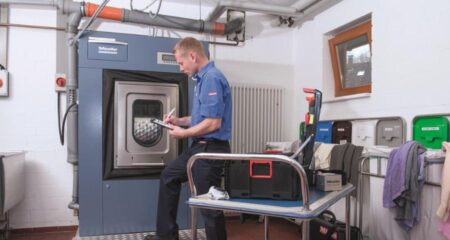
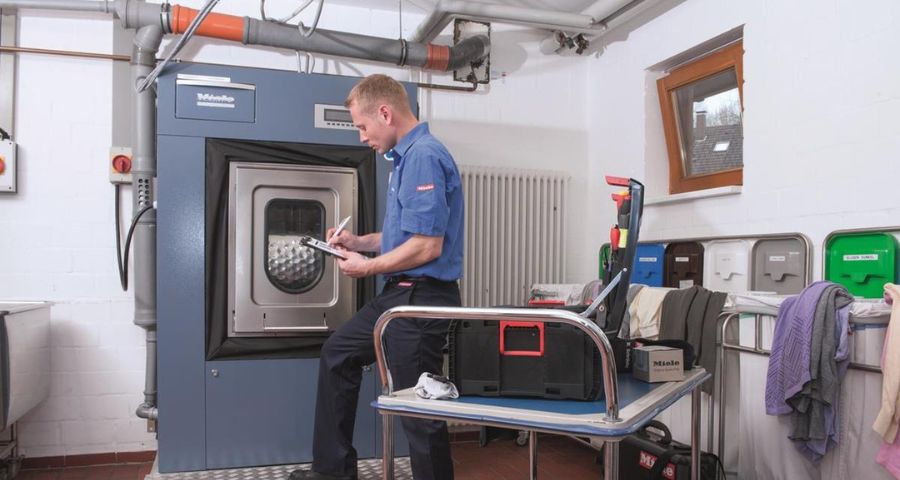
A business needs to know who will maintain the equipment and what happens if a fault develops. In a working laundry room, an unresolved breakdown can quickly interrupt the rest of the operation.
Commercial equipment should form part of a properly supported setup. This includes:
- Correct specification
- Professional installation
- Routine servicing
- Access to suitable parts
- Engineer support when required
Planned maintenance helps keep performance consistent and gives engineers an opportunity to identify wear before it develops into a larger problem.
Our guide explaining how often commercial laundry equipment should be serviced covers how workload and equipment type affect servicing requirements.
It is also important to allow safe access around each machine. The wider commercial laundry room requirements should therefore be checked before installation.
A domestic breakdown and a commercial breakdown have different consequences
When a domestic machine stops working at home, it causes inconvenience.
When laundry equipment stops working in a business, the consequences can be wider. Staff may not have the towels, uniforms, bedding or other items they need. The business might need to delay work, outsource laundry temporarily or change its normal operations.
That is why commercial equipment should be viewed as part of the business infrastructure rather than simply another appliance.
It needs to handle the expected workload and receive the support required to keep it operating reliably.
A business that depends on regular laundry output should not rely on equipment designed around normal household use.
Rental removes the main barrier to commercial equipment
Some businesses choose domestic equipment because they want to avoid the cost of purchasing a commercial machine outright.
However, those are not the only two options.
Commercial washing machine rental provides access to professionally specified equipment without the need for a large upfront purchase.
The rental agreement can include installation, routine servicing, maintenance and ongoing engineer support. Therefore, the business receives equipment designed for its workload alongside the support needed to maintain it.
If demand increases, capacity can also be reviewed and upgraded in a planned way. This helps the laundry setup continue to support the business as it grows.
Why businesses should choose commercial washing machines
When comparing commercial vs domestic washing machines, the most important consideration is not how similar they look. It is what they have been designed to do.
For a business processing laundry regularly, commercial equipment is the appropriate choice. It provides the durability, performance and support needed in a working environment.
Rental makes that equipment more accessible by removing the need for a major upfront purchase. It also ensures servicing, maintenance and engineer support are planned from the beginning.
Laundry Rental Scotland supplies commercial washing machines from trusted manufacturer partners, with installation and ongoing support included throughout the rental agreement.